It goes to DVLA
GOV.UK asks for your photocard or paper licence with the form, and a new licence comes back. From then on, the photocard is your licence.
Guaranteed acceptance or your money backDispatched the same working dayAccepted by HM Passport Office, DVLA & HMRC
Drafted by paralegals since 2000
Paper driving licences
A new name moves you onto a photocard, and the swap is free. Post form D1 to DVLA with your paper licence, a recent printed passport-type photo, and original proof of who you are and of your new name. Paper licences issued before 31 March 2000 are still valid, but GOV.UK says that once you update your name or address, DVLA issues a photocard only.
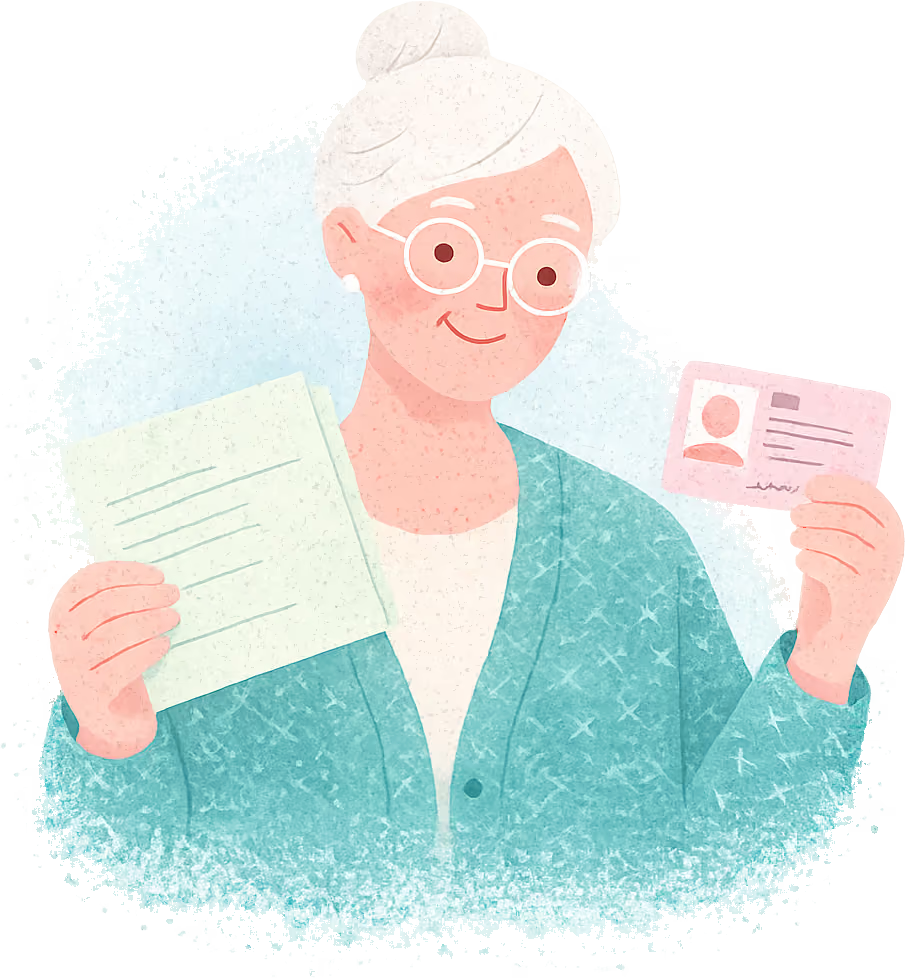
GOV.UK lists a change of name among the reasons you must get a new licence, and a new licence is always a photocard now. If nothing about you has changed and your paper licence is still valid, you can keep it: GOV.UK says there is no need to exchange it.
Everything goes to DVLA together. What comes back is a photocard in your new name, with your Deed Poll and identity documents following separately.
Collect the D1 pack from a Post Office that offers DVLA services: it cannot be downloaded, and a change of name cannot go through GOV.UK’s online exchange. Filling in form D1.
Freewith a new name
From GOV.UK’s name change, postal change of address and identity documents pages, checked October 2026.
GOV.UK’s guidance on swapping a paper licence asks for original identity documents, and its identity rules give three ways to show who you are. The first two keep everything at home.
Write the 9-digit number of a valid UK passport on the form, and keep the passport. GOV.UK says an expired one’s number cannot be used.
No countersignature
If you have a UK Visas and Immigration account, get a code from GOV.UK’s view and prove your immigration status service, choosing “something else” as the reason, and write it on the form.
No countersignature
An Irish passport, a passport from outside the EU and EEA with a visa sticker or stamp, a travel document, evidence that you receive a State Pension, or a UK birth, adoption or naturalisation certificate sent with a second document, such as a P60 or your marriage certificate.
Needs a countersignature
When you send a document instead of a number or code, someone else signs your form and photo to confirm who you are, and DVLA will contact them. If they have retired, write their former job on the form.
GOV.UK’s examples include a shopkeeper or local business person, a librarian, a teacher, lawyer or engineer, a police officer, bank staff, a civil servant, a minister of religion and a councillor.
The categories you may drive are held on DVLA’s record of your licence, and GOV.UK’s view driving licence service shows them, with any penalty points and the date the licence runs to. Look before the paper goes in the envelope, and make a note.
The service asks for your driving licence number, your National Insurance number and the postcode on your licence: if you have moved since, use the one printed on the paper.
Passed your car test before 1 January 1997? GOV.UK says you are usually allowed to drive a vehicle and trailer up to 8,250kg maximum authorised mass, and points to the same service to check it.
GOV.UK asks for your photocard or paper licence with the form, and a new licence comes back. From then on, the photocard is your licence.
GOV.UK’s name change page says you can still drive while you wait, even with the paper licence in Swansea.
GOV.UK tells holders of paper licences issued before 31 March 2000 that theirs are still valid and not to destroy them.
The paper counterpart that once came with a photocard has had no legal status since 8 June 2015. It is not a paper licence.
Once it is a photocard, it needs renewing every 10 years, and DVLA sends a reminder before the date.
Still free: GOV.UK’s fee table lists a paper licence swapped for a photocard with a change of address, or of name, at no cost. One D1 does both. Name and address together.
Say what happened on the form and include £20, the fee for a licence that is lost, stolen, defaced or destroyed. A lost licence and a new name.
From 70 a licence is renewed every 3 years, free, on the form D46P that DVLA sends you. A change of name still goes on form D1, and a photo you choose carries no fee.
nidirect says old-format licences there stay valid and are updated as they are renewed or replaced. A new name goes to the DVA on form DL1. Form DL1.
Not on the paper itself. A change of name swaps it for a photocard: post form D1 to DVLA with the paper licence, a recent printed passport-type photo, proof of your identity and original proof of the new name. What to send.
Yes. GOV.UK’s fee table lists a paper licence exchanged for a photocard with a change of name as free by post. The only charge is £20 if the paper licence has been lost, stolen, defaced or destroyed.
Yes, one recent printed passport-type photo, because the new licence is a photocard. GOV.UK points to its passport photo rules: 45mm by 35mm, in colour, against a plain cream or light grey background. The photo rules.
Yes, on one form D1, and it is still free. DVLA wants original proof of the new name but nothing to prove the address. Name and address together.
GOV.UK’s pages on the swap say nothing about losing a category, and your entitlements are held on your DVLA record. Check them with GOV.UK’s view driving licence service before you post the paper licence, and again when the photocard arrives.
Yes, if it was issued before 31 March 2000: GOV.UK says such licences are still valid and should not be destroyed. Once your name or address changes, though, you must get a new licence, and it will be a photocard.
Something else? Ask a paralegal and we will answer, usually the same working day.
Apply online in about five minutes. A paralegal drafts your Deed Poll, quality control checks it, and it is posted the same working day, guaranteed to be accepted by DVLA.
Secure checkout · card, PayPal, Apple Pay, Google Pay and Klarna
just ordered a Deed Poll.
Verified order · Online Deed Polls